

Playground Safety
The VIRTUS® Programs
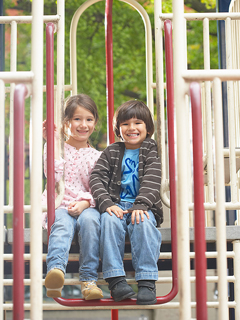 Approximately 170,000 children, under the age of 15 are treated for playground related injuries each year. Many of these injuries could have been avoided if better care were taken in designing and maintaining playgrounds and their equipment.
Falls are the most common cause of playground injury. Fatal injuries reported to the Consumer Product Safety Commission include entanglement of clothes, head entrapment, and impact from equipment tip-over or structural failure. Attention should be focused on lowering these risks by improving playground surfaces, design, and equipment installation and maintenance.
Playground Surfaces
Playground surfacing is the number one factor in the cause of injury due to falls. The use of concrete and asphalt are the reasons for this factor. By using softer, more shock absorbent materials, such as mulch or sand, the risk of injury can be significantly decreased.
Playground Design
Playgrounds should be designed to offer a variety of activities that help to enhance a child’s development of both motor and mental skills. There are eight basic guidelines to follow when designing a playground:
- Do not install equipment over hard surfaces such as concrete or asphalt. Use shock absorbent materials such as mulch or sand.
- There should be designated areas of play according to age, types of equipment, and activity.
- Allow for easy travel between equipment.
- Allow adequate space to exit equipment such as swings and slides.
- Separate the playground from nearby street with fencing
- Do not use equipment with angles or openings that might cause a child to become trapped.
- Do not use equipment that can be a burn hazard during hot months.
- Install guardrails on raised platforms.
- Use sized hand grips to allow children to easily grab hold of equipment.
Equipment Installation and Maintenance
Playground equipment should be well designed and made with durable materials. Playground areas and equipment should be thoroughly inspected on a regular basis. If repairs cannot be made immediately, the equipment should be deemed unusable until repairs are made. Some basic factors to look for when inspecting the playground area and equipment are:
- Visible cracks, warping, or breakage of components.
- Deformation of open hooks, shackles, rings, links, etc.
- Worn swing hangers and chains missing, damaged or loose swing seats
- Broken supports/anchors
- Exposed footings, cracked/loosened ground.
- Accessible sharp edges or points.
- Exposed ends of tubing that should be covered
- Loose bolts, nuts, etc.
- Splintered, cracked, or otherwise deteriorated wood.
- Lack of lubrication on moving parts.
- Broken or missing rails, steps, rungs, seats
- Surfacing material worn or scattered
- Hard surfaces, especially under swings, slides etc.
- Chipped or peeling paint.
- Vandalism (broken glass, trash, etc.)
- Pinch or crush points.
- Tripping hazards such as roots or rocks.
In addition, playground leaders should prepare written guidelines that define goals and procedures for their playground area and equipment. They, and any other staff, should be trained in first aid and should have knowledge of the equipment and its proper use. Other items to consider adding to a playground checklist are:
- Do not permit too many children on the same piece of equipment at the same time.
- Constantly observe play patterns; do not allow possible hazards and suggest appropriate equipment use.
- Prepare written accident reports with special attention to surface condition, type and extent of injury, age and sex of a child, and how the accident occurred.
Close supervision of children as they play, along with classroom safety instruction, will help contribute to a higher level of safety. With the attention and help of parents, school, and community, the number of playground related injuries can be reduced.
This article is not part of your continuing training. To access your required bulletins you must log in using the form in the upper left-hand corner of the screen. Then go to the TRAINING tab.