
Monitor All Programs... but, monitor for what?
By Sharon Womack Doty, J.D., M.H.R.
Consultant to the VIRTUS® Programs
 One of the elements necessary for child sexual abuse to occur is that the offender must have an opportunity to commit the offense. Child molesters need privacy and seclusion to commit their crimes. That’s the primary reason that the monitoring of programs involving children and young people is an important part of the overall process of creating and maintaining safe environments.
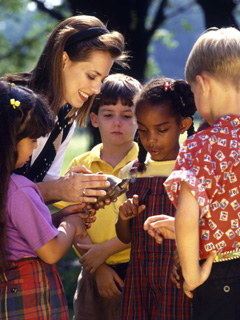
However, there are some circumstances that need special attention. For example, how does the parish monitor home-based Religious Education programs? How does a school respond if a parent refuses to be screened, but asserts the right to accompany his or her child on field trips?
While every situation is different, there are some standards that guide the decision-making process. In particular, the following criteria will assist in the establishment of policies that are consistent with the goals of a safe environment.
- Policies must demonstrate an organization’s commitment to openness in ministry activities and must require that adults be willing to be monitored when working with children and youth.
- Policies must respect the rights of everyone concerned but must never compromise the safety of children and young people.
- Policies must include provisions for dealing with emergencies.
- Policies should be proactive as well as punitive.
Applying these criteria to different situations can bring the intent of program monitoring into focus. For example, when viewed in light of these criteria, policies regarding home-based Religious Education programs could include:
- A statement that the Director of Religious Education intends to “drop in” unannounced on classes from time to time.
- A requirement that there are at least two adults present during all classes.
- A provision that no adults will be allowed to participate in class sessions or activities unless he or she has completed a background screening process and the Protecting God’s Children® training required by the diocese.
- A statement that at least two children must be present or class will be cancelled.
- Standards of behavior and conduct for teachers and other adults who are participating in the classes.
- Policies to deal with emergencies such as:
—A teacher suddenly becoming ill or being called away on an emergency.
—Parents who are habitually late picking up their children.
—Inclement weather or other weather-related emergencies.
—Parents who have an emergency and are unable to pick up their children.
Dealing with circumstances such as a parent who refuses to be screened but asserts the right to attend activities and field trips will take on a new focus. While the objective is to protect children, the rights of all involved should be respected and honored. So, for example, the parent may be allowed to attend, but will never be allowed to be with any children other than his or her own children unless accompanied by an adult who has completed the required background screening and is current on the Protecting God’s Children training required by the diocese.
Bottom line:
As each parish gains additional experience with its safe environment program, the process of drafting policies and procedures and establishing behavioral guidelines can assist the local faith community in anticipating and finding the best possible answers for potentially challenging situations that may arise.
This article is not part of your continuing training. To access your required bulletins you must log in using the form in the upper left-hand corner of the screen. Then go to the TRAINING tab.